Envisioning Cards
Every project we promote arises from the exchange of knowledge, experiences, and diverse perspectives. Because photographing is not just about recording an image; it is also about recognizing stories, activating memories, and generating new ways of understanding our environment.
In this context, SolipsisArt's participation in the Envisioning Cards project seeks to contribute to the construction of situated visual narratives that expand reflections on decolonization, strengthening the presence of photographers linked to their territories and recognizing their perspectives, knowledge, and authorship within an international dialogue.
From Ecuador, SolipsisArt Colectivo Fotográfico Ecuador was part of Design for Values and Critical Raw Materials: Decolonial Justice Perspectives, a project driven by TU Delft / Delft University of Technology in the Netherlands, which raises urgent questions about decolonial justice, just transitions, technology, territory, and responsibility. Ten photographers from our collective contributed images for the global expansion of the Envisioning Cards, activating reflections on power, knowledge, nature, memory, and common futures.
This participation deeply dialogues with our mission: to use photography and visual pedagogies as tools to think about territory, activate memories, open critical conversations, and contribute, from care and responsibility, to collective processes of social transformation.
Power and privilege
Power and privilege
Photographer: Yinna Higuera
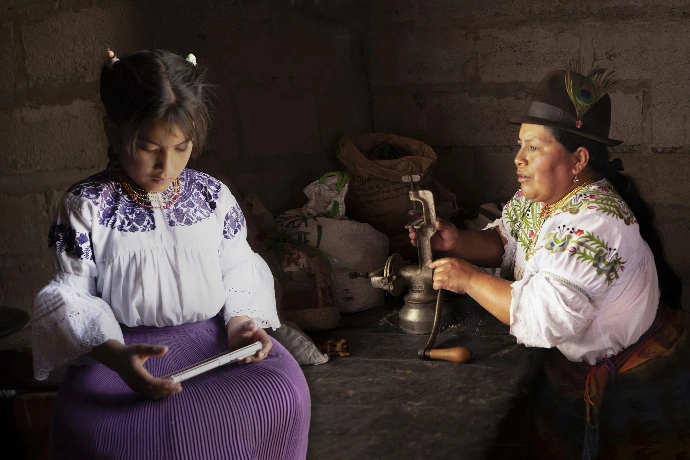
In the same scene, two forms of knowledge coexist: a girl holds a digital device that connects her to a vast, immediate, and seemingly accessible world; a woman operates a manual mill, a tool inherited from daily practice, the body, repetition, and territory.
The image poses a tension between access and recognition. While digital technology is often presented as a symbol of the future, inclusion, and progress, the practical knowledge that sustains community life is rarely named as innovation. However, both devices produce a world: one connects, the other transforms; one circulates information, the other sustains practices of nourishment, memory, and autonomy.
The question is not only who has access to technology, but who has the power to define what counts as technology. Between the phone and the mill, a political frontier opens: the one that separates legitimized knowledge from those that remain invisible, even though they continue to sustain life.
Epistemic diversity
Epistemic diversity
Photographer: Alejandra Rea Lozano
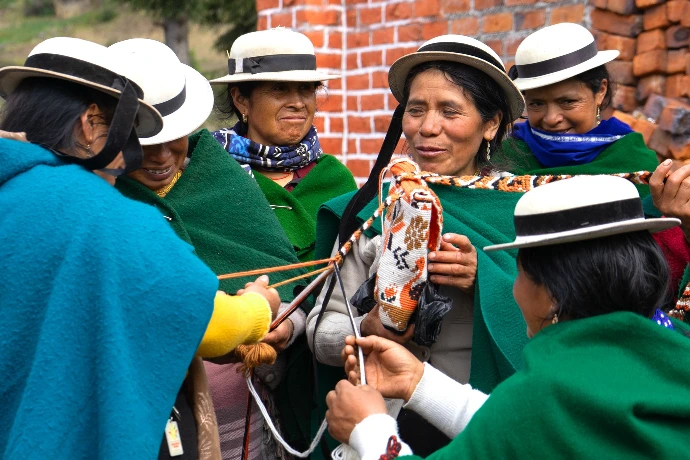
Threads traverse the image like paths impossible to follow completely. Among intense colors, textures, and hands in motion, the fabric seems to advance from disorder, as if the tangle were also a form of construction. Each crossing contains a decision, a memory, and a different way of understanding the world.
Nothing here responds to a single direction; the lines clash, contradict, and coexist, creating a network where difference does not separate, but rather sustains. The hands: articulate bonds, experiences, and knowledge that circulate outside defined structures. Learning involves mixing, deviating, and leaving space for multiple voices, times, and sensibilities coexisting within the same context.
Positionality
Positionality
Photographer: Anay Pacha Pillajo Tituaña
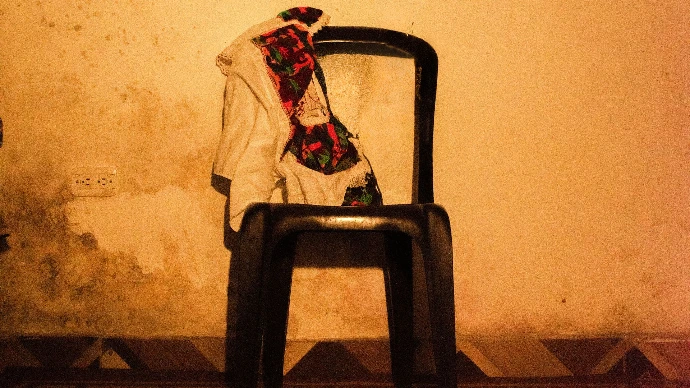
This photograph represents the absence and invisibilization of certain identities within different social and representational spaces. The empty chair symbolizes a place that exists, but
is not always occupied or recognized, while the embroidered shirt and flowers serve as traces of a presence linked to memory, identity, and cultural work.
From the positionality, personal experiences and contexts influence who is heard, valued, or displaced within decision-making processes. The empty space around seeks to emphasize the silence and distance that often traverse certain voices and knowledge. The image proposes reflecting on how some presences remain visible only through the objects and memories they leave behind.
Universalism
Universalism
Photographer: Ivo Flores Balseca (Loba Azul)

This photo performance questions the universal ideals of feminine beauty imposed by colonial, capitalist, and patriarchal logics. Wrapped in plastic, with price tags and the label “limited edition,” the body evidences how femininity becomes a commodity produced to be consumed and classified. The plastic symbolizes preservation and suffocation: it protects the product for the market, but nullifies its freedom.
The work critiques standardized beauty that, under promises of perfection, erases bodily differences, histories, and cultural contexts. Thus, the body ceases to be a living territory and becomes a surface moldable by dominant desire. This packaged body unveils a subtle violence: the constant pressure to adapt and display oneself to achieve social acceptance.
Colonial legacies
Colonial legacies
Photographer: Etsa (Carol Cortez Osorio)
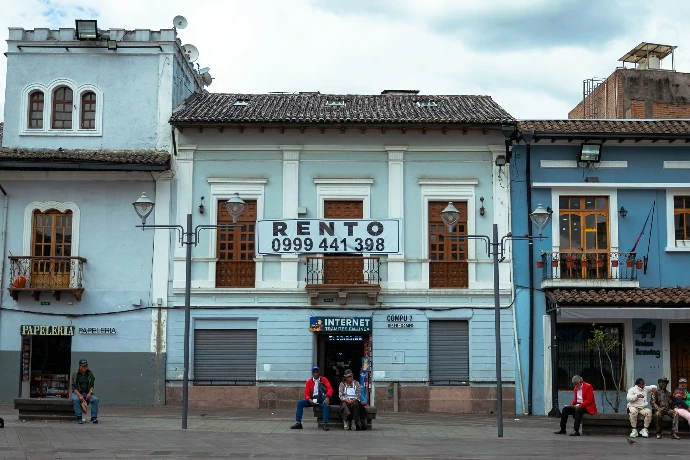
This image is a graphic representation of gentrification as a new form of colonialism and the obsolescence of community life in the face of the global market. The rental sign is evidence that colonial infrastructure now serves to feed the flow of capital. Here, we see how historical colonialism is reinforced in which the land still belongs to those who can pay for it, and real estate development translates into the expulsion of local inhabitants to turn their spaces into financial assets.
A closed heritage house is an infrastructure that has ceased to serve its territory by preventing access, repair, and the community's sovereignty over its own space. It represents the silence that remains when decisions about development are made in distant offices, seeking profitability instead of habitability.
Human - nature dichotomy
Nature - human dichotomy
Photographer: Cristina Chamba Carvajal
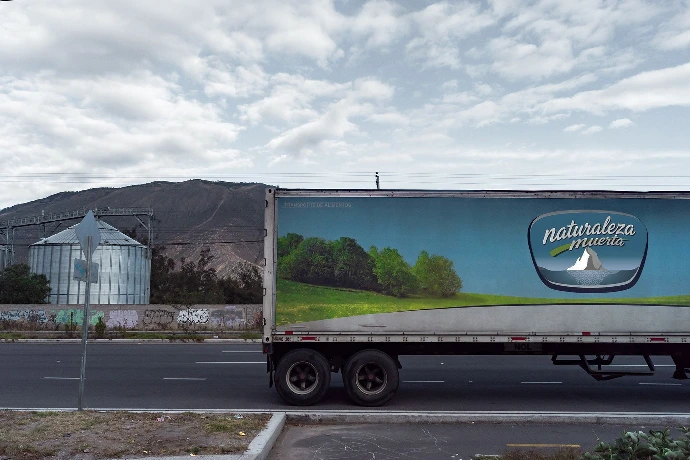
Visual capitalism produces sanitized landscapes to sell consumption. The truck functions as a surface of ecological fiction: it promises purity, freshness, and natural harmony while circulating in a territory transformed by industrial processes, urbanization, and resource extraction. It shows how many food industries use imaginaries of natural purity to hide industrial production chains, environmental impacts, or extractive relationships.
The landscape ceases to be a background and becomes a dispute. It is the environment that dismantles the advertising fiction of the truck with its eternally green landscape.
Common futures
Common futures
Photographer: Claudia Ramón
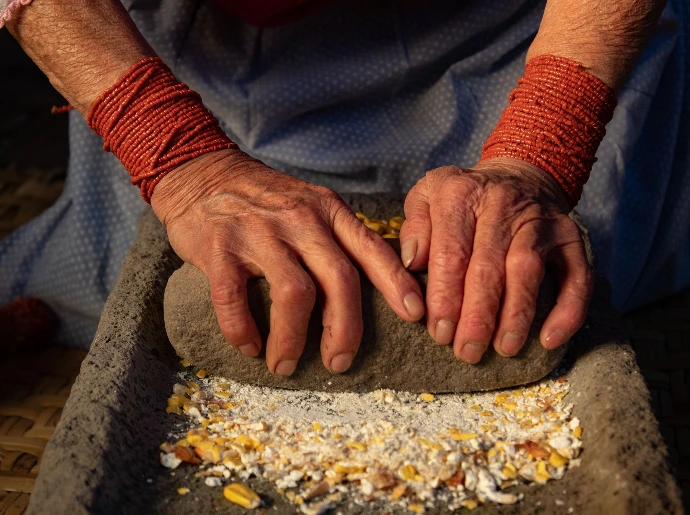
Corn, a nutritious, indigenous, and ancient food, represents not only a way to feed an entire continent but also the autonomy and sovereignty of the peoples who have preserved foods, recipes, and knowledge capable of sustaining community life, nutrition, and health across generations.
The image highlights the political dimension of domestic and food knowledge, understanding food not only as consumption but as a bond with the land, collective work, and cultural identity. In this everyday gesture also resides a way of imagining futures sustained by reciprocity, care, and food sovereignty.
Relational responsibility
Relational responsibility
Photographer: Verónica Alvear
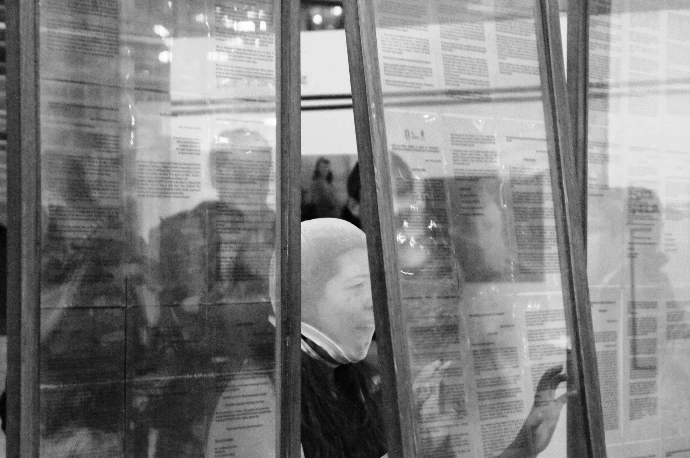
A play in which pain and feelings of anger, helplessness, and sadness emerge in the skin due to the absence of a family member who has gone and whose whereabouts are unknown: whether in a cloud or in a grave.
Relational responsibility can also be understood from the absence of justice by the State in the face of human rights violations, disappearances, and violence. These situations are affected by the inequalities created by the system and by the way they morally and emotionally impact a community or society. Likewise, they can break a family when a person disappears or has their life violently taken away. Hence the importance of promoting and building social justice from collective memory.
Complicity and benefit
Complicity and benefit
Photographer: Ximena Troya Salinas

Ultimately, in an agreement, all of us participate with what we have and who we are, with what we can contribute; from this perspective, we must make an effort to value what has no commercial value, to equalize the contributions, not only the fact of being represented but to give the rightful value to history, tradition, culture, the ancestral, the intangible.
Discomfort and transformation
Discomfort and transformation
Photographer: Karla Martínez Yánez

The normalization of violence in our territories paralyzes us, envelops us in a vicious circle. I wanted to lie to myself with the idea that everything would soon change, but now when I look back, I understand that my revolution was to take the courage to leave.